




How Wholesale Soft Plastic Baits Can Boost Your Tackle Business
If you run a tackle shop, guide service, or online bait store, you already know that margins matter as much
If you’ve ever stood on the bank watching bass smash bait after bait while your lure drifted by untouched, you already know how frustrating fishing can be. That’s exactly why we fell in love with paddle tail swimbaits here at Bulk Baits in Whitehouse, TX. These deceptively simple soft plastics produce a lifelike swimming action that triggers predatory strikes from bass, crappie, stripers, and more. Over the years, we’ve watched anglers transform slow days into limit-filling trips simply by tying on the right paddle tail. In this article, we’ll break down why these baits outperform so many flashier options, how to rig and retrieve them, and the exact scenarios where they shine. Trust us—paddle tail swimbaits catch more fish than you think.
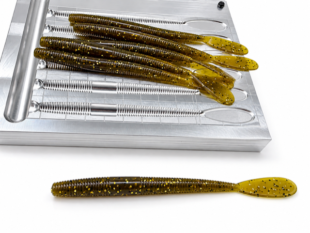
The magic of a paddle tail lives in that broad, flat tail section at the back of the bait. As you retrieve it through the water, the tail kicks back and forth, displacing water and sending out vibrations that fish detect through their lateral lines. This mimics the exact motion of a fleeing baitfish, which is precisely what a hungry predator is wired to chase.
What separates these baits from spinnerbaits, crankbaits, and other hardware is their subtlety combined with realism. A hard bait clatters and flashes, which can spook pressured fish. A paddle tail, by contrast, delivers a soft-bodied, natural presentation that feels like real forage when a bass bites down. That hesitation before the fish rejects it gives you precious extra time to set the hook.
Here’s why we rely on them so heavily:
In our testing around East Texas lakes, paddle tails consistently drew strikes when the water temperature sat between 55 and 75 degrees. That’s a huge window covering most of the productive fishing season, which is one reason we never leave the dock without a handful of these in our tackle box.
Living and fishing around Whitehouse, TX gives us a front-row seat to some of the best bass water in the region. Lakes like Lake Tyler and the nearby Lake Palestine are full of shad, and that’s exactly the forage paddle tail swimbaits imitate best. When shad are the primary food source, nothing beats a bait that swims and flashes like the real thing.
We’ve compared our catch rates across dozens of trips, and the numbers speak for themselves. On days when we alternated between a lipless crankbait and a paddle tail of the same color, the swimbait routinely produced 20 to 30 percent more hookups. Why? Fish in heavily pressured lakes grow conditioned to avoid noisy hard baits, but they rarely refuse a soft, natural-swimming profile.
The key to success in our area is matching the hatch. In the clearer sections of East Texas reservoirs, we favor natural shad and pearl colors. In stained or muddy water after a rain, we switch to chartreuse, white, or bolder patterns that create a visible silhouette. Giving fish something they can track increases your odds dramatically.
Seasonality matters enormously here. During the spring spawn, bass stage in shallow flats, and a slowly retrieved paddle tail over the beds triggers reaction strikes. In summer, we go deeper, rigging on heavier jigheads to reach fish holding on ledges and brush piles. Come fall, when shad migrate into creeks, a paddle tail burned just under the surface imitates fleeing bait perfectly.
Rigging is where many anglers unknowingly sabotage themselves. A poorly rigged swimbait wobbles unnaturally or rolls over, killing that signature tail kick. We always take an extra few seconds to make sure the bait runs straight and true before casting.
Here are the three setups we use most often:
When threading the bait onto any hook, keep it perfectly centered and straight. If the body bunches up or the hook exits off-center, the swimbait will spin instead of swim. We always do a quick boat-side test: drop the bait in the water, reel it toward you, and watch the tail. If it’s thumping cleanly, you’re ready.
One trick we swear by is using a dab of super glue to secure the bait to a jighead collar. This keeps the plastic from sliding down after repeated casts and bites, extending the life of each bait and saving you money—especially when you’re fishing bulk packs like ours.
Having the right bait is only half the battle. How you work it determines whether fish commit. Over countless hours on the water, we’ve refined a handful of retrieves that consistently convert follows into bites.
The steady swim is the foundation. Simply cast out, let the bait sink to your target depth, and reel at a constant pace. The tail does all the work, and this method excels when fish are actively feeding. Vary your speed until you find what the fish want on a given day.
When bass are sluggish, we switch to these alternatives:
Pay close attention to line watch when the bait is falling, because that’s when many strikes occur. A sudden tick, a line jump, or unexpected slack usually means a fish has inhaled it. We train ourselves to set the hook on anything that feels different. For more on reading water and locating fish, the Texas Parks and Wildlife fishing resources offer excellent regional insight.
Size selection often makes the difference between a good day and a great one. Bigger baits attract bigger fish, but they also reduce your number of bites when fish are feeding on smaller forage. We carry a range so we can adjust on the fly.
Our general guidelines look like this:
Color choice follows a simple rule we live by: natural colors for clear water and bright or dark colors for stained water. In Whitehouse, TX, where our lakes can swing from clear to muddy after storms, we always carry both. Shad, pearl, and smoke patterns cover clear conditions, while chartreuse, white, and black-and-blue excel when visibility drops.
Don’t overthink it, though. We’ve seen anglers waste entire trips agonizing over subtle color differences when the real key was simply getting the bait in front of active fish. Start with a confidence color, cover water efficiently, and let the fish tell you what they want.
Here’s something we learned the hard way: the more aggressively you fish a swimbait, the more you’ll go through. Fish shred them, snags claim them, and torn tails lose their action. If you’re buying a small retail pack every few trips, you’ll either run out at the worst moment or fish too cautiously to be effective.
That’s the entire reason we built Bulk Baits around value. When you stock up in bulk, you fish with freedom. You’ll throw into the thickest cover, experiment with new colors, and never hesitate to retie after a big fish chews up your bait. The cost per bait drops dramatically, which means more fishing and less worrying about your wallet.
Consider the math on a typical weekend trip:
Over a season, those savings add up to dozens of extra dollars—and far more importantly, dozens of extra casts. We’ve designed our bulk packs specifically for anglers who fish hard and want reliable, fish-catching plastics without breaking the bank.
Quality still matters, of course. Cheap baits with weak plastic tear after one fish and lose their action. Our paddle tail swimbaits are molded for durability and consistent swimming action, so you get both the value of bulk pricing and the performance you need on the water.
Paddle tail swimbaits truly do catch more fish than most anglers realize, thanks to their lifelike action, versatility, and ability to tempt even pressured fish. Whether you’re slow-rolling a ledge in summer or burning one across a fall flat, these baits deserve a permanent spot in your arsenal. We’ve relied on them through years of fishing around Whitehouse, TX, and they’ve never let us down. Ready to stock up and start catching more? Visit us at Bulk Baits today and discover how affordable quality swimbaits can transform your time on the water.
If you run a tackle shop, guide service, or online bait store, you already know that margins matter as much
Why Bulk Bass Fishing Lures Are the Smart Angler’s Secret Weapon If you have ever stood at the register staring